role of a dex for AI agents in machine learning
A dex for AI agents plays a transformative role in the field of machine learning by enabling decentralized, automated collaboration between intelligent agents. As machine learning continues to evolve, the demand for scalable, flexible, and efficient ways to access data, computation, and models is growing. A decentralized exchange (dex) designed specifically for AI agents addresses these needs by providing a platform where agents can securely trade resources, share tasks, and enhance their learning capabilities without the need for centralized control.
Machine learning relies heavily on access to high-quality data, computational resources, and well-tuned models. Traditionally, these resources are siloed within centralized institutions or cloud platforms, limiting accessibility and slowing innovation. A dex for AI agents disrupts this model by allowing agents to autonomously exchange datasets, model weights, training services, and inference results. For example, an AI agent that requires a specific dataset for training a model can use the dex to find another agent that owns the dataset and is willing to share it for a fee or in exchange for services. This promotes the efficient utilization of resources and encourages knowledge sharing across the ecosystem.
One of the key advantages of integrating a dex for AI agents in machine learning workflows is the automation of model training and deployment. Agents can autonomously seek out training services, rent GPUs, or outsource parts of a training pipeline to other specialized agents. Smart contracts facilitate these transactions, ensuring that once the agreed conditions are met—such as delivering a trained model or achieving a specific accuracy—payments are executed without human intervention. This not only reduces operational overhead but also accelerates the machine learning lifecycle from data acquisition to model deployment.
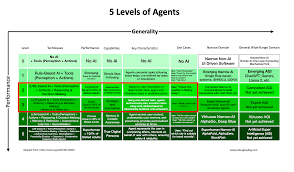
What is the role of a dex for AI agents in machine learning?
Another crucial role of a dex for AI agents in machine learning is enabling federated learning in a decentralized environment. Federated learning allows multiple agents to train a shared model without transferring raw data. Each agent trains the model locally and shares the updated parameters through the dex. This setup preserves data privacy while still benefiting from collective learning. The dex acts as a coordination layer where AI agents can register for federated tasks, receive incentives for participation, and ensure that updates are securely exchanged and aggregated.
Furthermore, a dex for AI agents can also contribute to improving model robustness and diversity. By enabling the exchange of various models trained under different conditions or datasets, agents can perform ensemble learning or cross-validate results more effectively. This reduces overfitting and increases the generalizability of machine learning models. Agents can even engage in competitions or benchmarking exercises, offering their models for specific challenges and receiving feedback or rewards based on performance.
In summary, a dex for AI agents plays a foundational role in advancing machine learning by decentralizing access to data, computation, and intelligence. It enables AI agents to operate autonomously in acquiring resources, training models, and collaborating across domains. This not only democratizes machine learning but also fosters a more dynamic, open, and scalable environment for the development and deployment of intelligent systems.